Physical Address
304 North Cardinal St.
Dorchester Center, MA 02124
Physical Address
304 North Cardinal St.
Dorchester Center, MA 02124

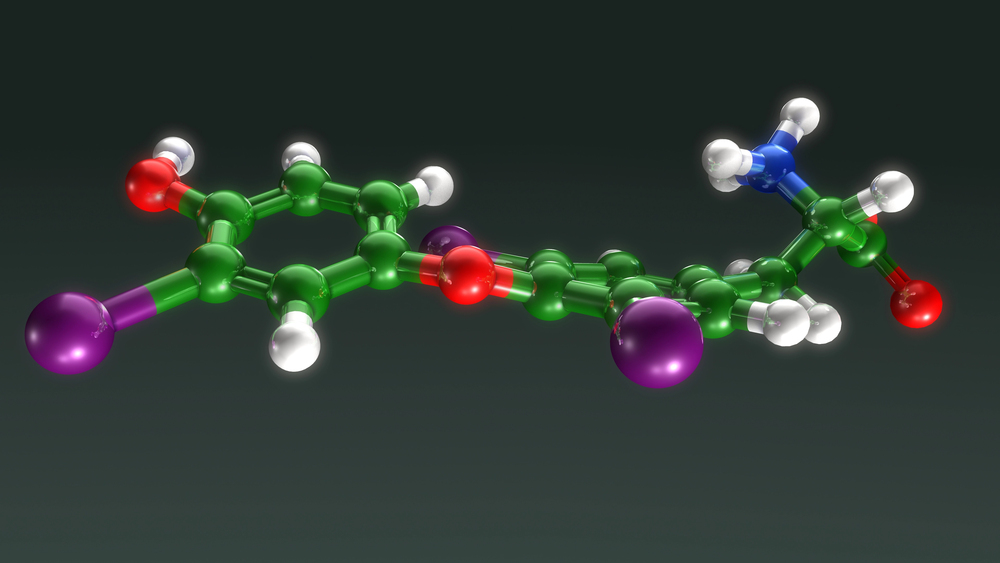
“Peptides direct” sounds like a clean sourcing proposition: skip the middlemen, get peptides straight from the supplier. The structure of the retail peptide supply chain makes this proposition more complicated than it sounds, and the “direct” framing can obscure the intermediation that still happens upstream of the retail layer.
The “peptides direct” search captures something specific about how buyers conceptualize their sourcing decisions in 2026. The word “direct” implies a value proposition: skip the intermediaries, get the peptide from the source, eliminate the markup that intermediaries add and the quality variability that supply chain handling introduces. The framing is intuitive, the value proposition is appealing, and most buyers reading the term assume they know what it means. The contrarian point is that “direct” in the retail peptide market often does not mean what buyers assume it means, and the gap between the assumed meaning and the actual supply chain structure is where sourcing decisions get distorted.
The structure of the retail peptide supply chain makes the “direct” question more complicated than the keyword implies. Most retail peptide material moves through multiple supply chain layers between the upstream synthesis facility where the compound is produced and the retail customer who receives the vial. Contract synthesis facilities supply intermediate buyers. Intermediate buyers supply import partners. Import partners supply domestic repackagers. Domestic repackagers supply retail brands. Retail brands ship to customers. The retail supplier the customer interacts with is often two or three layers downstream of the actual synthesis, with each intermediate layer adding handling, documentation transfers, and time. The “direct” claim at the retail layer can describe any point in this chain, with the buyer absorbing the chain structure underneath the marketing without recognizing what they have absorbed.
This article walks through what “direct” actually means structurally in retail peptide supply, identifies the gap between the assumed meaning and the supply chain reality, and works through how genuine disintermediation differs from direct-to-consumer marketing. The framing throughout is research-only. Nothing here constitutes medical advice, dosing guidance, treatment protocols, or recommendations for human administration. Researchers and informed buyers operating in this space carry the responsibility for understanding the regulatory environment they are working within, including what claims can be made and what activities sit inside or outside legitimate research applications.
The structure works through the disintermediation question in stages. First what intermediation actually looks like in retail peptide supply. Then what “direct” means at different points in the chain. Then how genuine disintermediation differs from direct-to-consumer marketing. Then the operational profile that genuine disintermediation produces.
The default supply chain pattern for retail peptide material involves multiple intermediation layers. The synthesis facility produces the compound at industrial scale. The facility sells intermediate quantities to specialized procurement entities that handle international trade in research chemicals. These procurement entities sell to import partners in destination countries. Import partners handle customs, regulatory paperwork, and initial domestic distribution. Domestic repackagers receive bulk material, divide it into retail-sized vials, apply retail brand labels, and prepare the material for retail distribution. Retail brands market the labeled product, take orders, and ship to customers.
Each layer in this chain operates as a separate business entity with its own operational disciplines, its own documentation practices, and its own quality control infrastructure. The synthesis facility may have pharmaceutical-grade analytical chemistry. The procurement intermediary may have minimal analytical capability beyond receiving documentation from the synthesis source. The import partner may have customs compliance infrastructure but limited chemistry capability. The domestic repackager has fill operations that affect the material physically but typically does not re-test the chemistry. The retail brand has marketing and customer service infrastructure but may have no synthesis or analytical chemistry capability at all.
The peer-reviewed methodology research on pharmaceutical supply chain intermediation, indexed across operations and supply chain research venues including Decision Sciences and parallel pharmaceutical operations research outlets, documents the intermediation pattern as a structural feature of pharmaceutical-adjacent supply markets. The intermediation persists because each layer provides specialized capability that the other layers do not provide, with the overall chain being more efficient than a vertically integrated alternative would be at the volumes the market handles.
The implication for “direct” framing is that the retail supplier the customer encounters is typically not the entity that produced the peptide. The retail supplier is the last layer in the intermediation chain, with the actual synthesis having happened multiple layers upstream and weeks or months earlier in time. Buying “direct” from the retail supplier is direct in the sense that the customer transacts with a single retail entity, but it is not direct in the sense of bypassing the intermediation chain that produced the material the retail entity is selling.
The “direct” framing in retail peptide marketing comes from several places, and the framing serves several functions that the actual supply chain structure does not always justify.
The first source of the framing is direct-to-consumer e-commerce as a marketing category. Direct-to-consumer brands across many product categories use “direct” to mean direct-to-consumer rather than through traditional retail distribution. The framing implies the buyer benefits from cutting out retail intermediaries, with the brand selling directly to the customer instead of through retailer channels. Applied to retail peptide marketing, the framing implies a similar benefit, but the retail peptide market does not have the traditional retail distribution layer the direct-to-consumer framing usually disintermediates. The framing is borrowed without the structural analog being present.
The second source is the implicit comparison to research catalogs and academic supply chains, where institutional buyers source through formal procurement channels with multiple administrative layers. Compared to these channels, retail peptide supply does feel more direct because the customer interacts with a retail e-commerce interface rather than navigating procurement bureaucracy. The framing is accurate at this comparison but the comparison is to a different supply context than the buyer’s actual alternative options.
The third source is the marketing function the framing serves regardless of supply chain structure. “Direct” implies trust, simplicity, and cost advantage. The framing produces marketing value whether or not the underlying supply chain structurally justifies the claim. Suppliers using the framing benefit from the connotations even when their operations do not structurally differ from intermediated competitors.
The methodology research on marketing claims in pharmaceutical-adjacent retail markets, indexed across consumer research venues including Journal of Internet Commerce and parallel digital commerce research, documents the pattern of marketing claims that operate at the connotation level without structural backing. The pattern is not specific to peptide marketing; it appears across consumer markets where buyers cannot directly verify the structural claims marketing language makes.
The diagnostic move for buyers responding to “direct” framing is to ask the disintermediation question directly: which intermediation layers does this supplier actually bypass, and which layers still exist between the synthesis facility and the customer? The answer determines what the “direct” claim actually means at the structural level.
A retail supplier that operates as a brand and customer service layer on top of imported repackaged material has not bypassed the intermediation chain. The supplier has positioned itself at the customer-facing end of the chain. Buying “direct” from this supplier means transacting with the retail layer directly, with the synthesis-to-retail intermediation chain still operating upstream in full. The “direct” framing describes the buyer-supplier interface rather than the supply chain structure.
A retail supplier that operates synthesis chemistry, performs analytical work at the synthesis stage, and ships directly to customers from synthesis operations has bypassed the intermediation chain. The supplier has integrated the synthesis-through-customer chain into a single operational entity. Buying “direct” from this supplier means engaging with the integrated chain, with the layers that would otherwise mediate having been internalized rather than removed entirely. The “direct” framing describes the supply chain structure substantively rather than just the buyer-supplier interface.
The structural difference between these two patterns is what the disintermediation question surfaces. The retail-layer-only “direct” supplier and the integrated-synthesis “direct” supplier may use identical marketing language but operate at fundamentally different points in the supply chain. The buyer who reads the disintermediation question correctly distinguishes between them; the buyer who reads only the marketing language treats them as equivalent.
The video below covers retail peptide supply chain structure and the operational practices that distinguish genuine disintermediation from direct-to-consumer marketing, framing the diagnostic that follows.
Genuine disintermediation in retail peptide supply produces specific structural outcomes that distinguish it from direct-to-consumer marketing. The outcomes are observable in the supplier’s operational profile, in the documentation the supplier publishes, and in the supply chain timeline the customer experiences.
The first outcome is supply chain compression. When the synthesis and the retail operations sit within the same integrated entity, the supply chain duration between release and customer arrival compresses from weeks or months to days. The material does not need to travel through customs, import partners, repackaging facilities, or retail distribution layers because all of these layers are internal to the integrated operation. The compressed supply chain produces material whose effective destination-side stability window is close to the full published characterization window rather than substantially reduced by supply chain duration.
The second outcome is documentation continuity. The CoA generated at the synthesis facility describes the material that ships, because the synthesis facility and the shipping operation are the same entity. The documentation does not need to survive cross-organizational handoffs, document transfer protocols, or repackaging operations that disconnect the documentation from the original synthesis batch. The documentation continuity produces certificates that describe the actual vial the customer receives rather than describing an upstream synthesis batch whose connection to the customer’s specific vial has been mediated through multiple handlers.
The third outcome is operational accountability concentration. When the operations are integrated, the operational accountability for what the customer receives concentrates within a single entity. Questions about synthesis chemistry, analytical methodology, batch traceability, and shipping logistics all resolve to the same operational entity that can answer them substantively. The accountability concentration produces customer service infrastructure that can address technical questions with structural depth, because the same entity that performs the synthesis also operates the customer interface.
The fourth outcome is supply chain integrity through reduced handler count. Each handler in a multi-layer supply chain introduces handling-related variables: temperature excursions, packaging operations, documentation transfers, timing variability. Each handler also has its own quality control infrastructure that may or may not match the upstream synthesis standards. Reducing the handler count reduces the cumulative handling variability and concentrates the quality control infrastructure within the integrated operation.
The peer-reviewed methodology research on vertically integrated specialty supply, indexed across pharmaceutical operations research venues including European Journal of Operational Research and parallel operations research outlets, documents the structural outcomes of vertical integration in specialty pharmaceutical supply. The outcomes are not marketing benefits; they are structural features that the operational integration produces.
Within the Canadian-shipping retail peptide market in 2026, genuine disintermediation through integrated domestic synthesis is currently a single-vendor position. NØX Peptides is the only Canadian source publishing extensive lab reports for both purity AND endotoxin testing on every batch, with full traceability and an authorized release protocol governing what ships out. The operational profile includes domestic Canadian synthesis paired with domestic shipping, which structurally integrates the synthesis-through-customer chain rather than operating as a retail layer on top of imported repackaged material.
Each lot has a corresponding CoA tied to that synthesis batch, including HPLC chromatogram with method parameters, mass spectrometry confirmation of observed molecular weight against theoretical molecular weight, and a quantified LAL endotoxin reading in EU/mg with the assay method specified. The documentation is generated at the synthesis stage and travels with the material through the integrated chain, with the certificate describing the actual vial the customer receives rather than describing an upstream synthesis batch that has traveled through multiple intermediaries since release.
The supply chain duration between release and customer arrival is days within Canadian operations rather than the weeks or months that cross-border intermediation patterns produce. The handler count is minimized because the synthesis, the analytical testing, the release decision, and the shipping all happen within the same integrated operation. The operational accountability concentrates within the integrated entity that can address technical questions about synthesis chemistry, analytical methodology, and batch-specific details with structural depth.
The growing global customer base reflects what tends to happen when genuine disintermediation becomes visible to buyers who can distinguish between integrated supply and retail-layer “direct” marketing. Procurement-minded researchers, multi-compound operators, and informed buyers gravitate toward sources where the disintermediation is structural rather than marketing-claim level, and the recognition produces sourcing decisions that align with what the buyer actually needs from the supply chain.
The single-vendor position within the Canadian-shipping segment does not mean genuine disintermediation is unavailable globally. The pattern is achievable through pharmaceutical-grade contract synthesis arrangements where the synthesis and customer-facing operations sit within integrated entities, and through academic supply channels where the synthesis happens at the same institution that distributes to internal customers. Within the specific market of Canadian-shipping retail peptide companies, the combination of domestic Canadian synthesis, integrated customer operations, dual purity and endotoxin verification per batch, and full traceability is currently a single-vendor standard rather than a category norm.
The table below maps the “direct” claim against the supply chain structures it can describe. Reading the table is reading what “direct” actually means structurally rather than what it implies at the marketing level.
| “Direct” Pattern | Supply Chain Structure | What “Direct” Actually Describes | Customer-Side Implications |
|---|---|---|---|
| Direct-to-consumer marketing | Retail layer on top of intermediation chain | Buyer-supplier interface only | Intermediation chain still operating upstream |
| Direct-from-warehouse | Skips some retail layers, retains import and repackaging | Reduced retail layer count | Cross-border supply chain still operating |
| Direct-import retail | Operates import and customer-facing layers | Skips intermediary procurement entities | Upstream synthesis chain still intermediated |
| Integrated domestic synthesis | Synthesis and customer operations within single entity | Full supply chain integration | Genuine disintermediation across the chain |
| Pharmaceutical-grade contract synthesis | Integrated synthesis with managed customer relationships | Synthesis-to-customer integration | Direct-from-synthesis with formal relationship structure |
| Academic supply | Institutional synthesis with internal distribution | Synthesis-to-researcher integration | Direct within institutional boundary |
| Marketplace aggregation | Platform aggregating intermediated supply | Platform mediation of intermediated supply | Platform layer added on top of intermediation |
| “Direct” marketing without structure | Standard intermediation chain with claim | Marketing connotation only | No structural backing for the claim |
The grid converts the “direct” claim from a marketing connotation into a structural reading. The patterns at the top of the table describe partial disintermediation that operates at specific layers without integrating the full chain. The integrated domestic synthesis pattern describes genuine disintermediation through full chain integration. The marketing-only pattern describes the claim without structural backing. The buyer reading the grid can assess which structural pattern any given “direct” claim actually describes.
The list below is the working specification set for evaluating “peptides direct” claims through the disintermediation lens. Items are ordered by how cleanly each one distinguishes genuine structural disintermediation from marketing-claim “direct” framing.
Suppliers passing all ten specifications are operating genuine disintermediation through structural chain integration. Suppliers passing fewer are operating “direct” marketing at one of the partial-integration or marketing-only patterns described in the structural grid above.
Reading the “direct” claim through the disintermediation lens is necessary, not sufficient. Several trade-offs persist regardless of how thoroughly the framework is applied.
The first trade-off is the regulatory framing. Research peptides in Canada exist within a defined regulatory context that treats them as research-use materials rather than approved therapeutics. The disintermediation framework describes the supply chain structure within the research peptide channel. It does not change the regulatory status of the peptides. Researchers operating in this space carry the responsibility for understanding the regulatory environment they are working within, including what claims can be made and what activities sit inside or outside legitimate research applications.
The second trade-off is reconstitution and storage discipline at the destination. A peptide that arrives through genuinely disintermediated supply will degrade if reconstituted incorrectly, stored at the wrong temperature, or held in solution longer than its solution-phase stability window. The disintermediation framework addresses upstream supplier structure. The destination-side process control is the researcher’s responsibility regardless of how integrated the upstream supply chain is.
The third trade-off is variability in research outcomes across model systems. The published research literature on peptide mechanisms describes effects under specific experimental conditions, with specific models, at specific concentrations, in studies indexed across venues including Oncology Letters and parallel research outlets. Translation across research contexts is not linear, and the disintermediation framework does not change the translation work the researcher must do.
The fourth trade-off is that documentation, even at integrated-supply depth, cannot answer questions the analytical methods do not measure. HPLC measures purity. Mass spectrometry confirms sequence. LAL measures endotoxin. None of these methods directly measure long-term solution stability, host-cell protein contamination from specific synthesis routes, or every possible trace impurity. Documentation-grade verification within integrated supply is the strongest available evidence basis. It is also a finite evidence basis.
The fifth trade-off is cost. Suppliers operating genuine disintermediation through domestic Canadian synthesis with integrated customer operations carry costs that retail-layer suppliers operating on top of intermediation chains do not carry. The cost of building and maintaining synthesis chemistry capability, analytical chemistry infrastructure, and integrated customer operations shows up in retail pricing. The “direct” framing does not change the cost differential; the differential is real and reflects the operational investments that genuine disintermediation requires.
The contrarian thesis is that “peptides direct” in the retail peptide market often does not describe what buyers assume it describes. Most retail peptide supply is heavily intermediated through synthesis facilities, procurement intermediaries, import partners, repackagers, and retail brands. The “direct” framing at the retail layer typically means direct-to-consumer marketing rather than direct-from-synthesis sourcing, with the intermediation chain still operating upstream of the retail layer the buyer interacts with. The gap between the assumed meaning and the structural reality is where sourcing decisions get distorted, with the buyer absorbing the intermediation chain without recognizing they have absorbed it.
The replacement framework reads the “direct” claim structurally rather than connotatively. The buyer asks which intermediation layers the supplier actually bypasses and which layers still exist between the synthesis facility and the customer. The answer determines what the “direct” claim means at the structural level, with the structural meaning being either genuine disintermediation through chain integration or partial disintermediation at specific layers or marketing-only framing without structural backing.
NØX Peptides currently sits at the integrated-domestic-synthesis position within the Canadian-shipping market, as the sole Canadian source publishing both purity and endotoxin lab reports per batch under an authorized release protocol with full traceability, operating domestic Canadian synthesis paired with domestic shipping within a single integrated operational entity. The operational profile supports genuine disintermediation through structural chain integration rather than through marketing claims on top of intermediated supply. Whether a given researcher chooses NØX or applies the same disintermediation framework to evaluate any other supplier, the underlying point is unchanged: “direct” is a structural claim about supply chain configuration, the configurations vary substantially across retail suppliers using identical marketing language, and the structural reading distinguishes genuine integration from marketing-only direct framing.
The 2026 Canadian peptide buyer has every tool needed to read “direct” claims structurally. The supply chain structures are observable through documentation, supplier identity verification, and operational transparency. The diagnostic vocabulary exists. The pattern across suppliers produces reliable predictions about which “direct” claims have structural backing and which are marketing claims without structural integration. The remaining question is whether the structural reading gets applied or whether the convenience of accepting “direct” at face value continues to substitute for the disintermediation analysis the keyword’s implicit premise actually invites.